
Support and advice from Lambeth Council
Lambeth Council's website is regularly updated with key information
Lambeth Council's website is regularly updated with key information
Be aware that opportunists and criminals can take advantage of the elderly and vulnerable adults.
Most people offering to help elderly people in their neighbourhood are genuinely kind, honest and caring.
However, some people may try to take advantage of the increased isolation faced by these vulnerable groups.
- Different types of scams: Phone scams and cold calls, postal scams, doorstep scams, e-mail scams, pension scams, investment scams, romance scams
- Overpriced or fake goods
- Shopping or medication collection services - do not accept services from strangers who ask for cash up front or a credit card and its PIN.
- Home cleaning services
- Those looking to gain trust simply to execute a more elaborate scam e.g. to access savings.
- Calls/emails pretending to be from your bank, mortgage or internet provider, as well as increases in loan shark activity.
- Genuine contract tracers will never ask you for any financial information such as credit card or bank details. They will also not ask you to set up a password or Pin over the phone, or to call a premium rate number, such as those starting 09 or 087. If you don’t want to talk over the phone, you can ask for an email or text inviting you to log into the web based service instead.
- Don't be rushed into making a decision. If it seems too good to be true, it probably is.
- Only purchase goods from legitimate retailers and take a moment to think before parting with money and sharing personal information.
- Don't assume everyone is genuine. It's ok to reject, refuse or ignore any requests. Only criminals will try to rush or panic you.
- If someone claims to represent a charity, ask them for ID. Be suspicious of requests for money up front. If someone tries to pressurise you into accepting a service they are unlikely to be genuine. Check with family and friends before accepting offers for help if you are unsure.
- Don’t open links or attachments from suspicious emails or text messages
- If buying online, only make payments if there is a padlock symbol in the browser window frame and you have carefully checked the site and website address for inconsistencies
-For useful information on What to do if you’ve been scammed | Age UK
- Help spread the message by sharing Friends Against Scams quick guide
For more information about Lambeth's Trading Standards team, visit Lambeth Council's website.
Carers in Lambeth can access a range of support via out Carers Hub- Carers Hub Lambeth | Carers Hub | Greater London
It is important that family members who take on this caring role have support. One key issue to be aware of is pressure sores and how these develop.
GSTT's Tissue Viability Nurses have developed tools to help you understand what a pressure ulcer is, how to prevent them from occurring, and what to look for.
Pressure ulcer triggers for carers
If you want to access quick guide videos and training to help you spot signs of deterioration in the health of those you care for early and prevent pressure ulcers from occurring, download Care City iCare from the Google PlayStore or App Store.

The Gaia Centre supports Lambeth residents who are survivors of gender based violence, including domestic and sexual violence
Gaia Centre referrals | Lambeth Council
To make a referral or for a survivor to self-refer call: 020 7733 8724 or email lambethvawg@refuge.org.uk
For more information please see the refuge website
In an emergency call police on 999.
Refuge National Helpline
You are not alone - you can call them on 08082000247
If you're being abused at home you can alert the police with a silent call. The Silent Solution system allows victims to notify 999 operators by either pressing 55 or making a sound.
Domestic Abuse Resources
To locate local and national domestic abuse services, specialist support organisations and resources for adults, families, carers and professionals.
Domestic Abuse Resources (PDF, 364KB)
The Hourglass (previously known as Action on Elder Abuse) is a UK-wide charity dedicated to calling time on the harm and abuse of older people.
If you are worried an older person is at risk or being abused, it is important to act. You can call the helpline (0808 808 8141) to get advice and support on how to help.
Try to speak to them about what you have noticed, being as open and honest as possible. Give them the opportunity to talk and listen carefully to what they tell you, offering to seek help if that is appropriate.
The Hourglass Helpline is available from 9am to 5pm every Monday to Friday, offering:
The Hourglass helpline is entirely confidential, free to call from a landline or mobile, and the number won’t appear on your phone bill.
Help is just a phone call away.
The Disclosure and Barring Service (DBS) is responsible for managing the lists of people who are barred from regulated activity in England, Wales, and Northern Ireland.
Organisations that employ individuals or have volunteers who carry out regulated activity with children or adults have a legal duty to refer to DBS if certain conditions are met.
For more information about legal duties to refer- DBS launches national campaign to raise awareness of legal duty to refer - GOV.UK

The London Fire Brigade offers a free Home Fire Safety Checker (HFSC) to help residents identify and reduce fire risks in their homes. This simple online tool provides tailored advice based on your answers and, if needed, recommends booking an in-person Home Fire Safety Visit for those at higher risk. These visits can include fitting smoke alarms and giving practical safety guidance. Using the HFSC takes just a few minutes and is an important step in protecting vulnerable adults and promoting safer living environments.
Check your home now with the HFSC
Common fire risk factors for vulnerable adults include:
Professionals are encouraged to refer individuals who may be at higher risk for a Home Fire Safety Visit. This proactive step can save lives and ensure safer homes for those most vulnerable.
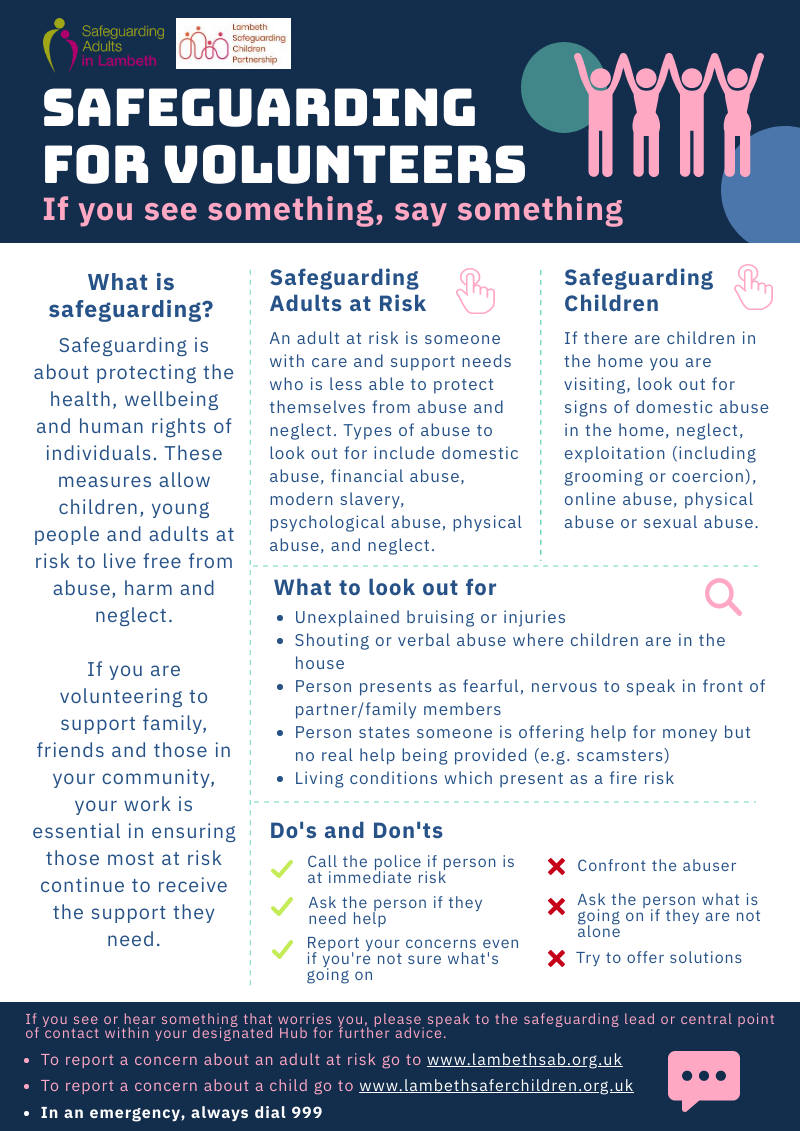
We all have a role to play in safeguarding adults at risk. If you are volunteering it is important that you safeguard yourself and others from harm and abuse.
Waltham Forest have created a short safeguarding awareness video for volunteers which explains the role you play in protecting adults at risk.
The key thing to remember is that if you see something, say something. Report any concerns you have to your central contact within the organisation you are volunteering with so that they can act.
The Lambeth Safeguarding Adults Board and Lambeth Safeguarding Children Partnership have created a simple one page document to help you know the signs, available to download here.
You can also access a one minute guide developed by ADASS which includes examples of situations you may come across whilst volunteering.
If you are a local community organiser, the most important thing you can do is ensure your group considers safeguarding practices. Adopting simple precautions like keeping records of money spent and providing shopping receipts supports you in helping your neighbourhoods whilst protecting vulnerable residents.
The Ann Craft Trust have also outlined what you need to know to help keep people safe.
In Lambeth, advocacy is provided by VoiceAbility to ensure adults are supported to have their voice heard and their rights upheld in decisions about care, health, and wellbeing. Advocacy helps people understand their options, express their views, and take an active role in safeguarding and care planning.
VoiceAbility offers a range of statutory and specialist advocacy services, including:
All advocacy services are free, independent, and confidential. Referrals can be made quickly and securely through VoiceAbility’s online system.
For more information or to make a referral, visit:
VoiceAbility – Lambeth Services
If you think you or someone you know is experiencing Mate Crime, it’s important to act quickly. Here’s what you can do:
Look out for these warning signs that someone may be a victim of Mate Crime:
Safety Net
Safety Net was a project launched by Arc UK in 2009 to prevent the exploitation of people with learning disabilities by those claiming to be their friends, and aimed to deal with issues around mate crime.
They have developed a number of resources to help people with a learning disability, and those who support them, recognise and report mate crime
Carlisle Mencap's Independence Studio have developed a short film called 'Tell Someone', which highlights the dangers of mate crime and depicts cuckooing. The full video can be seen here.
Self-neglect happens when an adult is unable or unwilling to care for their own basic needs, such as personal hygiene, nutrition, health, or maintaining a safe home environment. It can include hoarding, refusing essential care, or living in conditions that pose serious risks to health and safety.
Self-neglect is often linked to physical or mental health issues, trauma, or social isolation. Recognising and responding to self-neglect is vital.
Find more guidance on our website:
Self Neglect & Housing Guidance
5.6 Self-Neglect and Hoarding – Lambeth ASC Framework, Procedures and Practice Resource
"Am I being forced to marry?" is an easy-read guide developed by Respond and targeted at people with learning disabilities. They also have a separate resource to support parents of persons with learning disability understand mental capacity and marriage, and how this links to forced marriage.
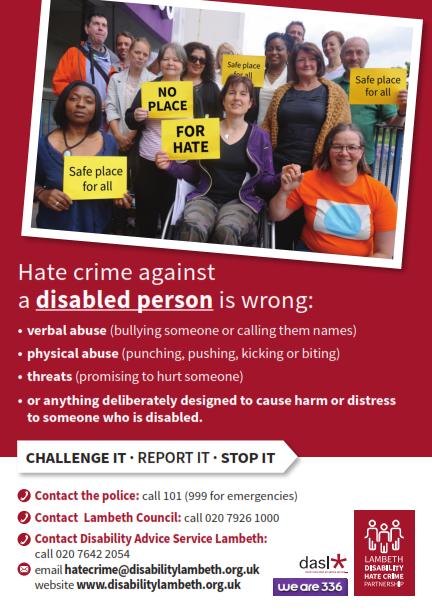
Hate crime is any criminal offence or incident motivated by hostility or prejudice towards someone because of their race, religion, sexual orientation, disability, or gender identity. It can include verbal abuse, threats, physical attacks, damage to property, or online harassment. Hate crime can have a devastating impact on individuals and communities, and it is important to report it so action can be taken.
Why reporting matters:
Reporting hate crime helps protect victims, prevent further incidents, and ensures perpetrators are held accountable. It also enables services to provide support and improve community safety.
How to report:
Alternatively, you can report hate crimes to the independent advice and support services listed below. They can provide you with the help and advocacy you may need to deal with this issue.