Abuse: Doing nothing is not an option
Type: PDF
Size: 416.11 KB

Lambeth Safeguarding Board Quarterly Newsletters showcase the work of the Safeguarding Adults Board and its partners, bringing together key updates, activities, achievements and developments.
Quarter Three 2025
Quarter Four 2025
Quarter One 2026
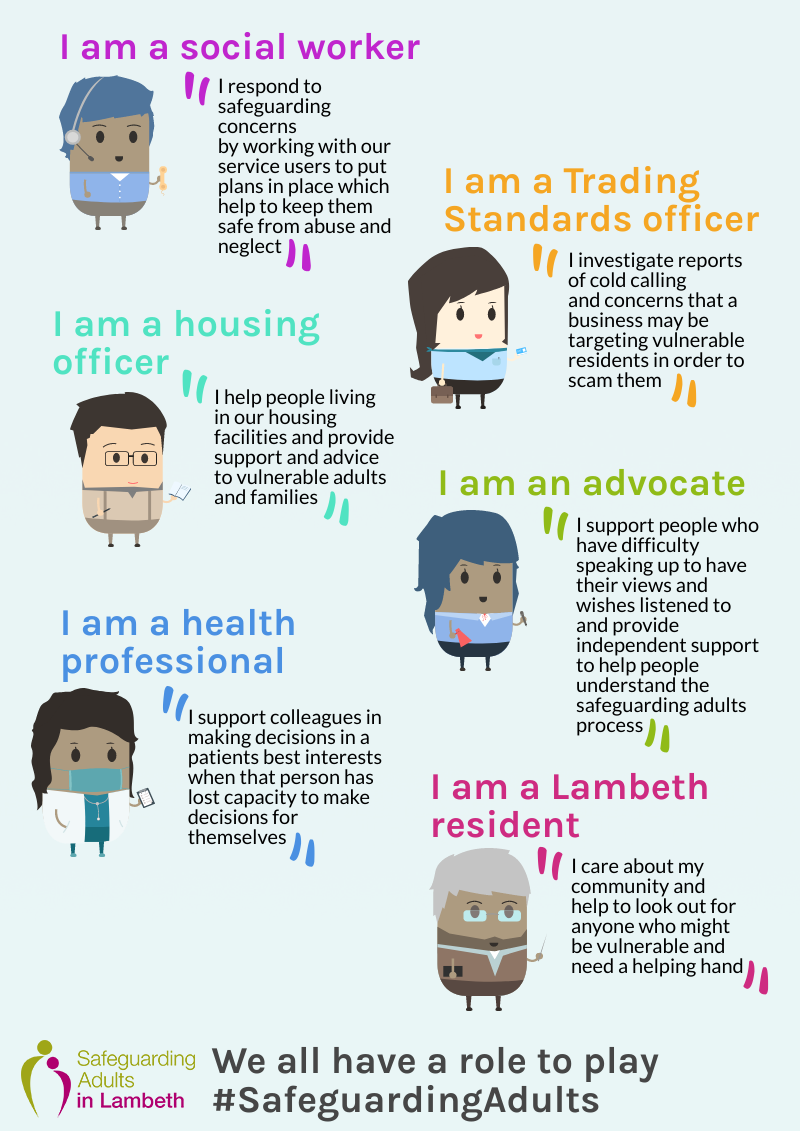
The below leaflets provide information and advice around what adult abuse looks like and how to raise a concern.
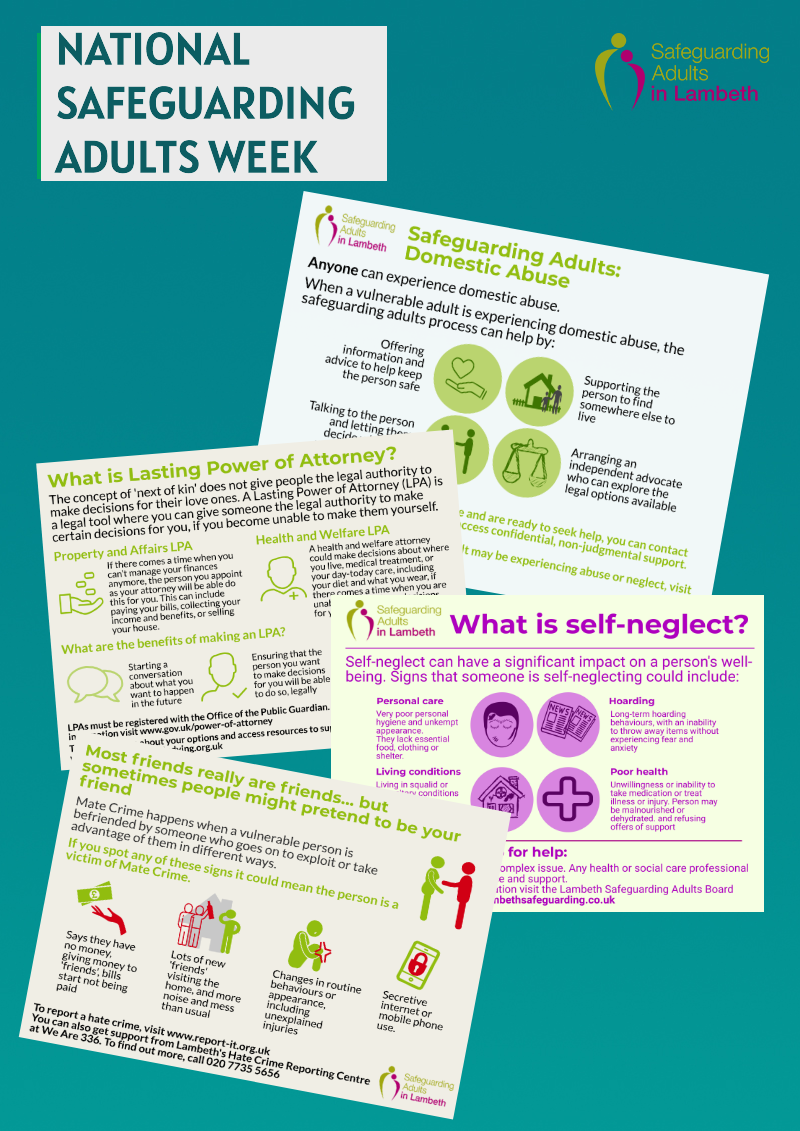
Many professionals working with adults have encountered cases of self-neglect or hoarding. This is a challenging area of work because often there is no simple way to help. This quick guide outlines the key messages for working with people who self-neglect.
We also encourage you to make use of new multi-agency guidance which outlines the different ways in which we can support people.
To help others think about what more they could do within their organisation to help protect adults at risk from abuse and neglect, the Community Reference Group developed a pledge document that lists simple ways to raise awareness of adult safeguarding and play a preventative role. What will you pledge to do?

The Herbert Protocol is a form that carers, family or friends of a vulnerable person can fill in.
It contains a list of information to help the police if the person goes missing, including medication required, mobile numbers, places previously located and a recent photograph.
Keeping a completed form saves the worry of trying to recall the information during the stressful time of someone going missing. It also saves time for the police, allowing the search to start sooner.
The initiative is named after George Herbert, a war veteran of the Normandy landings, who lived with dementia. He died whilst 'missing', trying to find his childhood home.
To find our more and to download the forms visit the Metropolitan Police website.
If you discover a person is missing, conduct a brief ‘open door’ search of the address, grounds and outbuildings, to see if you can find them.
If they're still missing, call 999 immediately. Don't worry - you won't be criticised for calling the police if you are worried about a person's safety. The sooner the police know someone is missing, the sooner officers can start looking for them.